
From a Calm Player to the Most Controversial Focus of the Grid: The Evolution of George Russell
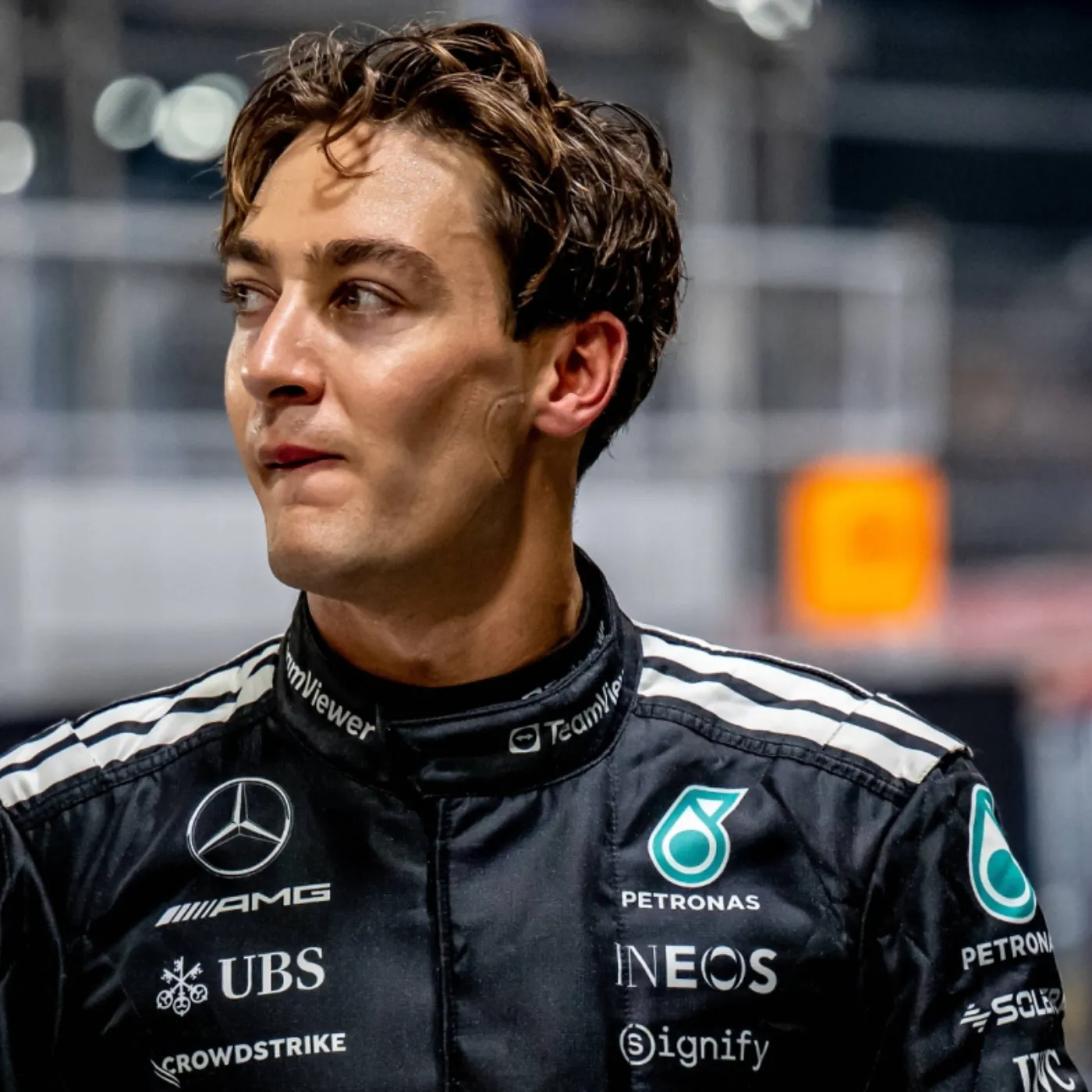
The world of Formula 1 has witnessed many dramatic transformations over the decades but few have been as polarising as the shift in the public persona of George Russell. When the young British driver first entered the paddock with Williams Racing he was widely regarded as the ultimate professional—a polite articulate and composed “calm player” who represented the future of Mercedes-AMG Petronas. He was the “Mr. Consistency” of the grid often praised for his technical feedback and his ability to drag underperforming machinery into the points.
However as the 2026 F1 season progresses that image has been replaced by something far more complex and aggressive. George Russell has now become the most controversial focus of the grid repeatedly speaking out about being treated unfairly and engaging in high-stakes psychological warfare with rivals like Max Verstappen. This transition has ignited a massive debate among fans and analysts alike regarding his motivations and his future in the sport.
 The Turning Point of the Mercedes Era and the Pressure of Expectations
To understand how a driver transitions from a quiet prospect to a lightning rod for controversy one must look at the immense pressure that comes with wearing the silver suit of Mercedes. For years Russell was the heir apparent to the throne held by Lewis Hamilton. When he finally secured his seat alongside the seven-time champion the expectations were astronomical. In the early days of this partnership Russell maintained his composed exterior even when the car lacked the aerodynamic efficiency to challenge for wins.
But as the team struggled to regain its dominant form and the “new generation” of drivers like Lando Norris and Charles Leclerc began to secure more frequent podiums the cracks in Russell’s calm facade started to appear. The internal drive to be the number one driver at the world’s most prestigious team has transformed his approach from one of patient observation to one of vocal confrontation.
Analyzing the High-Profile Collision with Max Verstappen
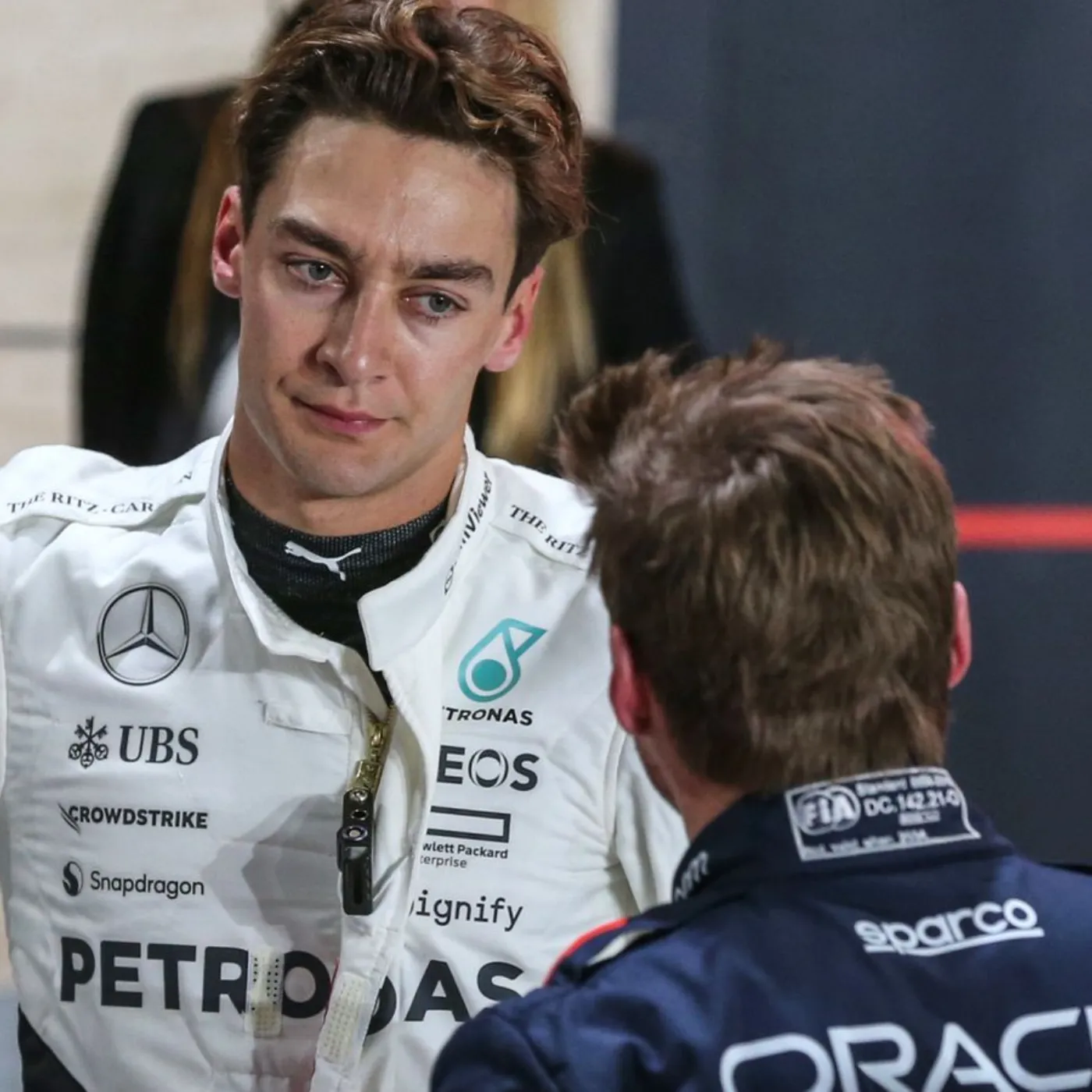
The most significant “controversial hot spot” in Russell’s recent career was the high-speed collision with Max Verstappen which left the racing world in a state of stunned silence. During a tight battle for position Russell’s aggressive defensive maneuvers led to contact that damaged both cars and effectively ended their chances for a podium finish. While many viewed it as a typical racing incident the fallout was anything but typical. Instead of the usual diplomatic post-race comments Russell took to the media to vent his frustrations claiming he was being targeted and treated unfairly by the stewards and his rivals.
This public spat with the four-time champion was a clear departure from his earlier “calm player” persona. It showed a driver who was no longer willing to back down even when facing the most dominant force in the Grand Prix era.
Radio Statements and the Psychology of the Modern Driver
One of the most fascinating aspects of the 2026 season has been the transparency provided by team radio broadcasts. George Russell has become a master of using the radio as a tool for public relations and psychological influence. His frequent complaints about being “pushed off” or “impeded” have become a staple of every race weekend. While some see this as a necessary way to alert the FIA stewards to potential infractions others view it as a sign of a driver who is increasingly desperate to control the narrative of his own races.
These radio statements have divided public opinion with many fans questioning if he is truly defending his position or simply pushing things further than we have ever seen a Mercedes driver go. The “emotional moment” of a radio outburst can often tell more about a driver’s mental state than any carefully prepared press release.
The Underlying Confrontation Between the Old Guard and the New School
The friction surrounding George Russell is not just about individual incidents; it is symptomatic of a broader shift in the F1 paddock. Russell represents a generation of drivers who have been raised in the digital age where personal branding and vocal advocacy are just as important as lap times. This often clashes with the “old school” mentality of senior figures in the sport who believe that grievances should be settled privately or on the track itself. By repeatedly speaking out about perceived injustices Russell is challenging the traditional hierarchy of the grid.
This has led to an “underlying confrontation” with veteran commentators and former champions who feel that his behavior is unbecoming of a driver representing a brand as prestigious as Mercedes-Benz.
Is George Russell Defending His Integrity or Seeking Attention?
This is the question that currently divides the global fan base. On one side supporters of the British driver argue that he is simply standing up for himself in an environment that is notoriously political and biased toward established stars. They see his vocal nature as a form of determination—a refusal to be bullied by the likes of Max Verstappen or the Red Bull Racing machine. On the other side critics suggest that Russell is overcompensating for a lack of consistent results by creating drama and playing the victim.
They point to his “cold statement” regarding team orders and his aggressive body language during interviews as evidence of a driver who has lost his way. The line between self-defense and unnecessary provocation is thin and Russell seems to be walking it with a level of intensity that is unprecedented in his career.
The Technical Reality of Racing in the Mid-Field Pack
A major contributing factor to Russell’s frustration is the technical parity—or lack thereof—in the 2026 F1 regulations. With the field becoming tighter and the aerodynamic wake of the cars becoming more sensitive every move in the mid-field pack is a high-risk gamble. When Russell finds himself fighting for fifth or sixth place instead of the lead he is exposed to the “rough and tumble” of the pack. In these close-quarters battles incidents are inevitable.
For a driver who was used to the “clean air” of the lead during his junior career the transition to the “dirty air” of the mid-field has been a psychological challenge. This technical reality often fuels the feeling of being treated unfairly as the margins for error are non-existent and the penalties for small mistakes are severe.
The Role of Toto Wolff and Mercedes Team Management
The management style of Toto Wolff has also played a role in the evolution of George Russell. Wolff is known for being a fierce protector of his drivers often defending them in the media against the FIA and rival teams. This supportive environment has given Russell the confidence to speak his mind without fear of internal repercussions. However some analysts believe that this lack of “tough love” from the team has allowed Russell to become too vocal for his own good.
While Lewis Hamilton has learned to pick his battles over a twenty-year career Russell seems to be fighting every battle as if it were his last. The team’s ability to manage his growing reputation as a “controversial focus” will be a key factor in their success over the coming seasons.
Impact on Sponsorship and the Global Mercedes Brand
The branding of Mercedes-AMG is built on the values of excellence precision and “the best or nothing.” A driver who is constantly at the center of controversy and public disputes can be a double-edged sword for such a brand. While the drama certainly drives TV ratings and social media engagement it can also alienate traditional corporate sponsors who prefer a more dignified and less erratic representative. As the 2026 season reaches its climax the commercial department at Brackley will be watching Russell’s behavior closely.
They need a driver who can win championships but they also need one who can represent the silver star with the same grace that Lewis Hamilton has for over a decade.
The “Villain” Arc and the Power of Social Media Marketing
In the age of social media marketing there is a phenomenon where certain athletes are cast in the role of the “villain” to drive engagement. George Russell appears to be leaning—intentionally or not—into this arc. By being the one who challenges the popular champions and speaks out against the system he has become the “most controversial focus” of the digital conversation. This has led to a massive increase in his personal following but it has also made him a target for intense online criticism.
The “frenzy” across the country every time he makes a radio statement is a testament to his power as a digital influencer. Whether this “villain” reputation will help or hinder his career in the long run remains to be seen but it has certainly made him one of the most talked-about figures in professional motorsports.
Comparing the Russell-Verstappen Rivalry to Historic F1 Feuds
The tension between Russell and Max Verstappen has drawn comparisons to the historic feuds between Senna and Prost or Schumacher and Hill. These rivalries were defined by a combination of on-track brilliance and off-track psychological warfare. Russell’s insistence that he is being treated unfairly is a classic tactic used to put pressure on the stewards and get inside the head of his opponent. However unlike the legends of the past Russell is operating in a world of 24-hour news cycles and instant fan feedback. Every word is magnified and every gesture is analyzed by millions.
This makes his transition from a “calm player” to a controversial figure even more impactful as the stakes for his reputation have never been higher.
The Psychological Burden of Being the Future of British Racing
With the eventual retirement of Lewis Hamilton on the horizon George Russell carries the weight of being the future of British racing. This is a burden that has broken many talented drivers in the past. The pressure to live up to the legacy of the most successful driver in history while fighting against a dominant Red Bull team is immense. This pressure can manifest in many ways and for Russell it seems to have manifested as a hypersensitivity to perceived injustices.
When he speaks about being treated unfairly he is perhaps reflecting the internal frustration of someone who feels he should be winning but is being held back by factors outside his control. This psychological depth is what makes his “controversial focus” so compelling to watch.
Stewards Decision and the Consistency of the FIA
A central theme in Russell’s complaints is the perceived lack of consistency from the FIA stewards. He has frequently pointed out that maneuvers that are allowed for some drivers are penalized for him. While the FIA has made efforts to improve the clarity of the racing rules in the 2026 season there is still a significant amount of subjectivity in the decision-making process. By being vocal Russell is attempting to force the stewards into a more rigid application of the rules.
This is a risky strategy as it can lead to a contentious relationship with the officials who hold his fate in their hands during every race weekend. The “stunned silence” of the paddock when a penalty is announced is often followed by a lengthy and public debate led by Russell himself.
The Evolution of the “Mr. Consistency” Nickname
Early in his career Russell was dubbed “Mr. Consistency” for his ability to finish races and extract the maximum from his car. As he has become more controversial that nickname has taken on a new and more sarcastic meaning among his detractors. They argue that the only thing he is consistent at now is complaining and finding himself in the middle of a controversy. To regain the respect of the entire grid Russell needs to return to the clinical on-track performances that first earned him his reputation.
Winning a race with a dominant and “clean” performance would do more to silence his critics than a thousand radio statements ever could.
Public Opinion the Split Between Support and Criticism
If you look at the fan forums and social media polls the divide in public opinion is nearly fifty-fifty. Younger fans tend to appreciate Russell’s outspoken nature and his willingness to “tell it like it is.” They see him as a modern athlete who is not afraid to show emotion and fight for his rights. Older fans however often express nostalgia for the days of the “calm player” who did his talking on the track. This generational gap in how a driver should behave is at the heart of the Russell controversy.
He is the first “social media native” to occupy a top-tier seat at Mercedes and he is redefining the expectations of the role in real-time.
Looking Ahead to the Remainder of the 2026 Season
As the championship moves toward its final rounds the pressure on George Russell will only increase. With several high-speed tracks like Interlagos and Abu Dhabi remaining the opportunities for contact and further controversy are numerous. Every time the lights go out the eyes of the world will be on the number 63 car to see if he will maintain his composure or if he will once again become the “most controversial focus” of the weekend. For Russell the goal must be to balance his natural aggression with the professional restraint that the Mercedes brand requires.
If he can do that he may yet secure the world championship that many believe is his destiny.
The Human Element Behind the Racing Helmet
At the end of the day it is important to remember that George Russell is a human being operating at the absolute limit of human performance. The adrenaline of driving a Formula 1 car at 300 kilometers per hour can make even the most rational person react emotionally. While his “radio statements” and complaints about being treated unfairly can be frustrating for some they are also a glimpse into the raw passion and intensity that it takes to compete at this level.
Whether he is “pushing things further than fans have ever seen” or simply fighting for his survival in a brutal sport Russell has undeniably become the most fascinating character in the modern paddock.
The Strategic Value of Controversy in Modern Sports
In a world where attention is the ultimate currency being at the center of a controversy is not always a bad thing. It keeps your name in the headlines it makes your races a “must-watch” event and it builds a narrative that can be sold to sponsors and television networks. While Russell may not have intentionally set out to become a controversial figure he has certainly learned how to navigate the environment to his advantage. The “frenzy” that follows his every move is a sign of his growing importance to the sport’s commercial success.
As long as he continues to be the “most controversial focus” of the grid George Russell will remain at the very top of the F1 hierarchy.
Final Thoughts on the Transformation of a Champion
In conclusion the transformation of George Russell from a “calm player” to a controversial icon is one of the most significant storylines of the 2026 season. His willingness to speak out against perceived injustices and his aggressive on-track battles with champions like Max Verstappen have redefined his image and divided public opinion. Whether he is a hero defending his integrity or a driver pushing things too far is a question that may never have a definitive answer.
What is certain however is that the “stunned silence” of the paddock is frequently broken by the voice of a man who refuses to be ignored. As the engines roar and the lights turn green the world will continue to watch George Russell with a mixture of admiration and skepticism waiting to see what the next chapter of his controversial journey will bring. The story of the “most controversial focus of the grid” is far from over and it promises to be one of the most enduring legacies of the modern Formula 1 era.